
What Is Sclerotherapy?
Answer-first summary (target the snippet — keep in the first 60 words):
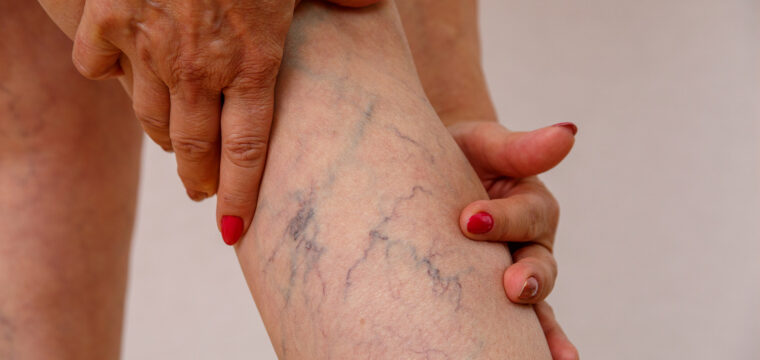
Sclerotherapy is a minimally invasive treatment in which a physician injects a medication called a sclerosant directly into a vein. The sclerosant irritates the vein’s inner lining so the vein seals shut, and blood reroutes through healthy veins nearby. It is the recommended treatment for symptomatic spider veins and reticular veins, and it is often used alongside other procedures for larger varicose veins.
Sclerotherapy is performed in the office, takes about 15 to 45 minutes depending on how many veins are treated, and needs no general anesthesia. Most people walk out and return to normal activity the same day.
At Vein Health Clinics, sclerotherapy is performed by Dr. Obinna Nwobi, a board-certified vascular surgeon — the same physician who evaluates whether an underlying vein problem is driving the veins you can see.
How sclerotherapy works
The medication used is called a sclerosant. The two most widely used sclerosants are polidocanol and sodium tetradecyl sulfate (STS), both given as either a liquid or as a foam.
Once injected, the sclerosant damages the inner lining of the vein wall. The vein walls stick together and the vein closes. Over the following weeks to months, the body absorbs the closed vein and it fades from view. Blood that used to travel through it is automatically rerouted into healthy deeper veins, which is why closing a diseased vein does not harm circulation — that vein was already moving blood inefficiently.
Foam versus liquid. Foaming the sclerosant with a small amount of gas lets it displace blood and hold contact with the vein wall longer, so foam is more potent per unit of drug and is generally chosen for larger veins. Liquid is typically used for the smallest surface vessels. For symptomatic telangiectasias and reticular veins — the fine red and blue surface veins most people call spider veins — the 2022/2023 SVS–AVF–AVLS guidelines give sclerotherapy with liquid or foam their strongest recommendation (Grade 1, moderate-quality evidence).
Ultrasound guidance. When the target vein sits deeper than the surface, the injection is performed under duplex ultrasound so the needle and the spread of the sclerosant are watched in real time. That version is called ultrasound-guided foam sclerotherapy, or UGFS.
What sclerotherapy treats well — and what it doesn’t
This is the part most articles skip, and it is the part that determines whether you get a durable result.
Sclerotherapy is a first-choice treatment for:
- Spider veins (telangiectasias) that are symptomatic or cosmetically bothersome
- Reticular veins — the slightly larger blue-green feeder veins
- Symptomatic varicose tributaries, where guidelines recommend either miniphlebectomy or foam sclerotherapy
- Residual or recurrent veins remaining after a previous vein procedure
Sclerotherapy is generally not the first choice for:
- Axial reflux in a major superficial trunk — a leaking great or small saphenous vein. For those, the SVS–AVF–AVLS guidelines suggest endovenous laser ablation, radiofrequency ablation, or high ligation and stripping over physician-compounded ultrasound-guided foam sclerotherapy, because those options showed better long-term quality of life and less recurrence.
The practical meaning: if the veins you see on the surface are being fed by a failing valve higher up in the leg, treating only the surface veins tends to disappoint. That is why a duplex ultrasound examination — the accepted standard for diagnosing saphenous incompetence — comes before treatment planning, not after. In many legs the right answer is ablation of the trunk and sclerotherapy of what remains, staged over more than one visit.
Internal link: Sclerotherapy vs. Endovenous Ablation: Which Is Better? · Varicose vein treatment
Why spider and varicose veins form in the first place
Veins carry blood back toward the heart against gravity, and one-way valves inside them keep it from falling backward. When those valves weaken, blood pools in the segment below the failed valve. Pressure builds, the vein stretches, and the next valve down is stressed until it fails too. On the surface that shows up as spider veins; in larger vessels it becomes the bulging, ropey veins most people picture. Sustained high pressure in the leg veins is called chronic venous insufficiency, and left alone it tends to progress — toward swelling, skin changes and, in advanced cases, venous ulcers.
Spider veins are frequently painless. They can still be the first visible clue to a pressure problem underneath.
Internal link: What is chronic venous insufficiency? · Are spider veins a health concern?
What to expect, step by step
Before. You are evaluated in the office and, in most cases, receive a duplex ultrasound of the leg to map which veins are refluxing. ⚠️ Verification item: confirm the standard pre-sclerotherapy workup at VHC so this reflects actual practice.
During. The skin is cleaned, and the sclerosant is injected through a very fine needle — often at several points along the vein, worked from the larger vessels toward the smaller ones. Most people describe a brief stinging or cramping sensation rather than pain. Deeper veins are treated under ultrasound, sometimes with a local anesthetic. No sedation is required.
Immediately after. You will rest briefly, then a compression wrap or compression stocking goes on the leg. Compression applied right after treatment reduces clot formation inside the treated vein and helps limit staining of the skin. Walking is encouraged with the compression in place.
The following days. Standard published guidance is to keep compression on continuously for about 2 weeks after treatment; longer post-procedure compression has been associated with less persistent hyperpigmentation and matting.
Results timeline. Small spider veins usually fade over 3 to 6 weeks; larger veins can take 3 to 4 months to resolve. Most patients may require multiple sessions to clear an area.
Risks and side effects
Sclerotherapy has a strong safety record, and the great majority of side effects are local, cosmetic and temporary. You should still know them before consenting.
Common and usually temporary:
- Skin darkening (hyperpigmentation) along the treated vein, from iron pigment left behind by broken-down blood cells — reported in roughly 30% of patients, typically appearing 6 to 8 weeks after treatment and fading over months
- Telangiectatic matting — a blush of new fine red vessels near the treated area
- Bruising, redness, itching, mild swelling, tenderness or a firm cord along the treated vein
- Stinging or cramping at the moment of injection
Uncommon:
- Superficial thrombophlebitis (inflammation and clot in a surface vein)
- Small skin ulcers or scarring if sclerosant leaks outside the vein
- Transient headache, visual disturbance, chest tightness, dizziness or migraine — reported more often in people with a history of migraine
Rare but serious: deep vein thrombosis and, very rarely, arterial injury or allergic reaction.
Higher risk of pigmentation or matting has been described in patients taking combined oral contraceptives, minocycline or disulfiram — tell us about every medication you take.
Who should usually postpone or avoid sclerotherapy: people who are pregnant, people with an active blood clot, people with known acute VTE, severe previous neurologic/cardiac sclerotherapy reactions, severe acute systemic illness/infection, critical limb ischemia, and people with certain clotting disorders or a known allergy or hypersensitivity to the sclerosant.
When to seek urgent care. Sclerotherapy is not an emergency procedure, but a blood clot can be. Call 911 or go to the nearest emergency room if you develop sudden shortness of breath, chest pain, coughing up blood, or fainting. Contact us the same day — or seek urgent care — for new one-sided calf or thigh swelling with pain, warmth and redness, a rapidly spreading rash or hives, or a spreading skin ulcer or fever near the treated area. These may signal deep vein thrombosis, pulmonary embolism, an allergic reaction or infection, and none of them should be watched at home.
Internal link: Top warning signs of deep vein thrombosis
Does sclerotherapy last?
The vein that is treated is closed permanently, and the body absorbs it. That is genuinely durable.
What sclerotherapy does not do is stop your venous system from developing new problem veins. Genetics, age, pregnancy, weight, hormones and long hours standing all keep pushing in the wrong direction, and vein disease is progressive. When surface veins are treated while an underlying refluxing trunk is left untreated, the guidelines are direct about the consequence — recurrence is more likely. Long-term success comes from treating the source, then maintaining the result with compression, activity and periodic follow-up. Published guidance recommends follow-up beyond three months after treatment to check whether a staged procedure is needed.
Honest expectation: excellent, lasting clearance of the veins we treat, plus a plan for the ones your legs may make later.
Frequently asked questions
Is sclerotherapy painful? Most patients describe brief stinging or cramping as the medication enters the vein rather than pain. No general anesthesia or sedation is needed, and a local anesthetic can be used for deeper veins.
How many sclerotherapy sessions will I need? More than one is typical, because veins are treated in stages and each treated area needs weeks to resolve before the next pass. The number depends on how many veins are present and how large they are. ⚠️ Verification item: confirm the range Dr. Nwobi quotes.
How long does it take for veins to disappear after sclerotherapy? Small spider veins commonly fade within 3 to 6 weeks. Larger veins may take 3 to 4 months.
Can I go back to work the same day? Most people return to normal daily activity the same day with compression in place. Strenuous exercise is restricted for a period afterward. ⚠️ Verification item: confirm the restriction window.
What’s the difference between sclerotherapy and vein ablation? Sclerotherapy closes a vein chemically with an injected medication; endovenous ablation closes a larger vein with heat delivered through a catheter. Ablation is preferred for a leaking saphenous trunk; sclerotherapy is preferred for surface and tributary veins. Many legs need both. See Sclerotherapy vs. Endovenous Ablation.
Is sclerotherapy covered by insurance? Coverage depends on your plan and on whether treatment is being done for symptoms of vein disease or for appearance alone. Our team can review your specific plan with you before anything is scheduled. ⚠️ No coverage claims are made here by design — do not add any.
Will the veins come back? The treated veins do not reopen. New veins can develop over time, especially if an underlying refluxing vein was never addressed.
Is sclerotherapy safe during pregnancy? It is generally postponed during pregnancy. Compression therapy is the usual approach until after delivery. ⚠️ Verification item.
Find out what’s actually causing your veins.
Spider veins are easy to see. The valve that’s feeding them isn’t. Dr. Obinna Nwobi, a board-certified vascular surgeon, evaluates the whole leg — including ultrasound of the deeper veins when indicated — before recommending sclerotherapy, ablation, or a combination.
Vein Health Clinics sees patients at five Central and East Florida offices:
| Location | Address | Phone |
|---|---|---|
| Winter Haven | 1121 1st St S, Winter Haven, FL 33880 | 877-817-8346 |
| Oviedo | 1000 Executive Dr, Ste 8, Oviedo, FL 32765 | 877-817-8346 |
| Winter Garden | 301 SW Crown Point Rd, Ste 140, Winter Garden, FL 34787 | 877-817-8346 |
| Port St. Lucie | 1801 SE Hillmoor Dr, Ste C-208, Port St. Lucie, FL 34952 | 877-817-8346 |
Schedule online or contact us.
Medically reviewed by Obinna Nwobi, MD, board-certified vascular surgeon. This article is for general education and is not a substitute for individual medical advice.

About The Author
Dr. Obinna Nwobi
Dr. Obinna Nwobi is a board certified vascular surgeon, who chose to practice in an underserved area in Florida. In a field that graduates only 100 new vascular surgeons a year, Dr. Nwobi is an exemplary vascular surgeon who worked for the Indian Health Services, Veterans Affairs Hospital, and large private and public hospitals.

Grab Our New Patient Offer
Free Consultation & Vein Screening
- Get a free venous ultrasound screening
- Free consultation with our vascular doctor to discuss your assessment results and treatment options
- Receive a personalized treatment plan
- Have all your questions answered
- Get advise on insurance and payment plans

Find Out if Your Are at
Risk of Vein Desease
This quick ONE MINUTE assessment can help you identify potential Vein Disease Symptoms.

At first I was hesitant to go there because I saw them thru an ad but I am so glad I did. I have gained so much knowledge and understanding about my fibroid and the options I have available to me. The nurse practitioner takes her time to answer all my questions and very competent. The staff is incredibly friendly and work with your schedule. I highly recommend this place

I am not a fan of Ultrasounds but the team that was responsible for assisting me were very professional and friendly. Once I was in the room, I can say that time went really fast. I sure recommend the clinic.






 Online Marketing For Doctors