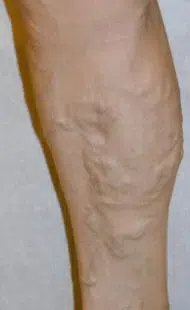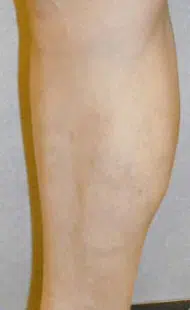

Spider veins are small, visible red, blue, or purple veins that appear near the surface of the skin — most often on the legs, ankles, and face. They are caused by weakened valves in tiny blood vessels and affect up to 80–85 percent of adults in the United States to some degree [1]. While spider veins are usually not dangerous on their own, they can cause discomfort and may be an early sign of underlying venous insufficiency — a condition that worsens without treatment [2].

At Vein Health Clinics, board-certified vascular surgeon Dr. Obinna Nwobi treats spider veins with sclerotherapy — the gold-standard, minimally invasive procedure that permanently closes affected veins. Treatment is performed in-office, typically requires no anesthesia, and most patients return to normal activities the same day.

[CTA Button] Schedule a Spider Vein Consultation → [Link to /online-scheduler/] [Phone] Call 877-817-8346

Thread Vein Removal in Oviedo, FL

Are you experiencing uncomfortable, swollen, or unsightly veins that resemble spider webs? Do not ignore the warning signs. These symptoms may be indicative of a more serious vascular disease and will likely worsen if left untreated.

If you are suffering from spider veins, our team is here to help. We offer thread vein removal and treatments for Florida residents. We aim to provide our patients with relief from the discomfort that spider veins can cause.

Contact us today to discuss your options and schedule an appointment.

spider veins on face treatment
Spider vein treatment can remove spider veins on legs, ankles and feet, resulting in more attractive-looking and pain-free legs.

What Are Spider Veins?

Spider veins are small, thin veins that lie close to the surface of the skin. They are typically red, blue, or purple and are most often found on the legs or face.

Spider veins are considered a venous disease, caused by weakened valves in the veins, causing blood to pool and appear as web-like veins.

What Causes Spider Veins?

Spider veins (telangiectasias) are small, dilated blood vessels that sit just beneath the surface of the skin. They typically appear as fine, branching lines that resemble a spider web or tree branches — which is how they got their name [1][3].

Key characteristics of spider veins:

  • Size: Usually less than 1 millimeter in diameter — much smaller than varicose veins
  • Color: Red, blue, or purple, depending on whether they carry oxygenated or deoxygenated blood
  • Shape: Branching, web-like clusters; may also appear as short, isolated lines
  • Location: Most commonly found on the legs (especially the thighs, calves, and ankles), but also on the face, chest, and hands

Spider veins develop when one-way valves inside small veins weaken or fail. Healthy valves open to let blood flow toward the heart and close to prevent backflow. When valves malfunction, blood pools in the vein, causing it to enlarge and become visible through the skin [1][2].

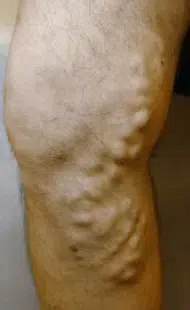
How spider veins differ from varicose veins: Varicose veins are larger (3 mm or more), raised above the skin surface, and often feel rope-like. Spider veins are flat, smaller, and closer to the surface. While both result from valve dysfunction, varicose veins are more likely to cause pain, swelling, and medical complications. However, spider veins and varicose veins often coexist and may share the same underlying cause. [Internal link → /services/varicose-veins-treatment-florida/]

Symptoms of Spider Veins

Many people seek spider vein treatment primarily for cosmetic reasons, but spider veins can also cause physical symptoms [1][2]:


  • Aching or discomfort in the area around affected veins — especially after prolonged standing
  • Burning or itching over clusters of spider veins
  • Heaviness or tiredness in the legs, particularly at the end of the day
  • Throbbing or cramping near affected areas
  • Swelling in the lower legs and ankles (may indicate deeper venous involvement)

When Spider Veins May Signal a Deeper Problem

Spider veins can be an early, visible sign of chronic venous insufficiency (CVI) — a condition in which the valves in deeper leg veins are not functioning properly [2][4]. Warning signs that spider veins may indicate CVI include:


  • Spider veins accompanied by persistent leg swelling
  • Skin darkening or discoloration near the ankles (hyperpigmentation)
  • New spider veins appearing rapidly or spreading
  • Symptoms that worsen progressively over weeks or months
  • A family history of varicose veins, blood clots, or venous disease


If you notice these signs, a vein evaluation can determine whether deeper venous disease is present. Early detection allows treatment before CVI progresses to more serious complications such as venous ulcers. [Internal link → /blog/are-spider-veins-a-health-concern/]


⚠️ When to seek urgent care: If you experience sudden leg swelling, warmth, redness, or tenderness in one leg — with or without visible spider veins — seek medical evaluation promptly. These may be signs of deep vein thrombosis (DVT), which requires immediate treatment. [Internal link → /services/deep-vein-thrombosis-florida/]

laser for spider veins
Improve the appearance of spider veins on the face with our spider vein treatment.

How Are Spider Veins Diagnosed?

Dr. Nwobi diagnoses spider veins through a combination of visual assessment and, when indicated, diagnostic imaging:

  1. Physical examination — A careful inspection of the legs (or other affected areas) while you are standing and sitting. The doctor evaluates the pattern, extent, and distribution of visible veins, and checks for signs of underlying venous disease such as swelling, skin changes, or tenderness.
  2. Duplex ultrasound — If the examination suggests deeper venous involvement, a non-invasive duplex ultrasound may be performed. This test uses sound waves to visualize blood flow and detect valve dysfunction in deeper veins that may be contributing to visible spider veins [5]. Identifying underlying venous reflux is essential for effective, long-lasting treatment.
  3. Medical history review — The doctor reviews your symptoms, family history, prior pregnancies, occupation, and any history of blood clots or vein procedures to build a complete picture.

This evaluation ensures the correct treatment plan addresses not only the visible spider veins but also any underlying cause.

Benefits

There are numerous benefits to having varicose veins removed which include:

  1. Improved Appearance: Spider veins can be unsightly and embarrassing. Removing them can help restore your confidence and make your legs look more attractive.
  2. Reduced Discomfort: Spider veins can cause aching, burning, and itching sensations. Removing them can help reduce these sensations and make your legs more comfortable.
  3. Improved Blood Flow: Spider veins can block or slow down blood flow, leading to more serious issues. Removing them can help restore normal blood flow and reduce the risk of further health issues.
  4. Reduced Risk of Blood Clots: Spider veins can also increase the risk of blood clots, which can be dangerous. Removing them can reduce the risk of blood clots and improve your overall health.

Treatments - Oviedo, Winter Haven and Ocoee Florida

Treatment options for spider veins include:
  1. At Vein Health Clinics, Dr. Nwobi offers proven, minimally invasive treatments to permanently remove spider veins.

    H3: Sclerotherapy — The Gold Standard

    Sclerotherapy is the most widely recommended treatment for spider veins on the legs [5][6]. During the procedure:


    • A specially formulated sclerosing solution is injected directly into the affected veins using a very fine needle
    • The solution irritates the inner lining of the vein, causing it to swell shut and seal closed
    • The body naturally reroutes blood through nearby healthy veins
    • Over several weeks, the treated vein is absorbed by the body and fades from view


    What to expect:


    • Each session takes approximately 15–30 minutes
    • No general anesthesia is required — most patients feel only a mild stinging sensation
    • You can walk and resume most normal activities immediately after treatment
    • Compression stockings are typically worn for a prescribed period to support healing
    • Multiple sessions may be needed depending on the number and extent of spider veins
    • Most patients see significant improvement within 3–6 weeks after treatment [5]


    [Internal link → /blog/what-to-expect-from-your-first-sclerotherapy-appointment/]


    Compression Therapy

    Compression stockings are not a treatment for removing spider veins, but they play an important supporting role:


    • Prescribed before treatment to manage symptoms while awaiting a procedure
    • Worn after sclerotherapy to improve outcomes and reduce bruising
    • Used as ongoing support for patients with chronic venous insufficiency

    Dr. Nwobi will recommend the appropriate compression level and duration based on your specific condition.


Gallery
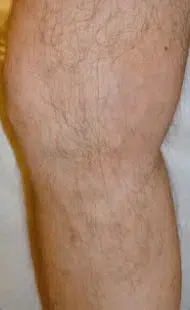
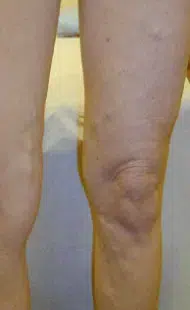
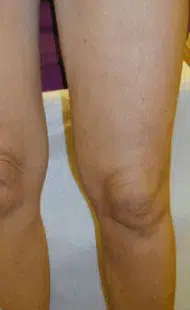
Before & After Results

View before and after images of our patients to see the results you can expect.

What Happens After Spider Vein Treatment?

Recovery after sclerotherapy is typically quick:

  • Most patients return to work and daily activities the same day
  • Walking is encouraged immediately after the procedure
  • Compression stockings should be worn as directed (typically 1–2 weeks)
  • Avoid strenuous exercise, hot baths, and direct sun exposure on treated areas for the period recommended by Dr. Nwobi
  • Mild bruising, redness, or slight tenderness at injection sites is normal and resolves within days to weeks
  • Treated veins begin fading within 3–6 weeks; larger veins may take 3–4 months to fully fade [5]

Will spider veins come back? Treated spider veins are permanently closed and will not return. However, new spider veins can develop over time in different locations — especially if underlying risk factors (such as genetics, occupation, or hormonal influences) persist. Regular follow-up evaluations help monitor for new vein development and address any emerging issues early.

Why Choose Vein Health Clinics for Spider Vein Treatment?

  • Board-certified vascular surgeon — Dr. Obinna Nwobi is a fellowship-trained vascular surgeon with specialized expertise in venous disease, not just cosmetic vein treatment. This means your spider veins are evaluated in the context of your complete vascular health.
  • Comprehensive vein evaluation — Every spider vein consultation includes an assessment for underlying venous insufficiency. Treating only the visible spider veins without addressing deeper reflux can lead to rapid recurrence.
  • Proven, evidence-based treatments — Dr. Nwobi uses sclerotherapy — the gold-standard treatment recommended by the Society for Vascular Surgery and the American College of Phlebology [5][6].
  • Five convenient Central Florida locations — Offices in Oviedo, Winter Haven, Winter Garden, Port St. Lucie, and Ocala make expert vein care accessible across the region.
  • In-office procedures — Spider vein treatments are performed in the comfort of our office, with no hospital visit required.

Spider Vein Treatment Cost and Insurance

  • Spider vein treatment for purely cosmetic reasons is typically not covered by insurance
  • If spider veins are associated with documented symptoms of venous insufficiency (pain, swelling, skin changes) and confirmed by ultrasound, insurance may cover treatment as medically necessary
  • Our team works with most major insurance carriers and will verify your coverage before treatment

Schedule Your Spider Vein Consultation → [Link to /online-scheduler/] [Phone] Call 877-817-8346

Our Expert Doctor

About Dr. Obinna Nwobi, MD, MPH

Dr. Obinna Nwobi is a board-certified vascular surgeon and the Medical Director of Vein Health Clinics. He earned his Master of Public Health from the Johns Hopkins Bloomberg School of Public Health and his medical degree from the University of Tennessee College of Medicine. Dr. Nwobi completed his general surgery residency at the University of Medicine and Dentistry of New Jersey and his vascular surgery fellowship at the Vascular Group PLLC and Albany Medical Center in New York.

Dr. Nwobi specializes in minimally invasive treatments for the full spectrum of venous disease — from cosmetic spider veins to complex chronic venous insufficiency and peripheral artery disease.

vein doctor florida

How to Schedule a Consultation

For more information on our vein care services and the cost of each service, or to schedule a consultation at our clinic, please contact us at one of the following:

Working Hours

Our Vein Clinics Locations

Oviedo

Winter Haven

Ocoee

  • 301 SW Crown Point Rd Suite 140
    Winter Garden Fl 34787
  • 877-817-8346

Port St. Lucie

  • 1801 SE Hillmoor Dr, Suite C-208
    Port St. Lucie, FL 34952
  • 772-261-5116

Ocala

Frequently Asked Questions About Spider Vein Treatment

If you require more information on spider veins treatment, please read our most frequently asked questions:

The most effective treatments for spider veins are sclerotherapy and laser treatment. Sclerotherapy involves injecting a solution into the vein that causes it to collapse and eventually fade away.

Laser treatment involves using laser energy to heat and destroy the vein, which then fades away. Both treatments are effective and have few risks.

It can be worth it to remove spider veins. They can be cosmetically unappealing, and many people opt to have them removed for aesthetic reasons.

In some cases, spider veins may also cause discomfort, itching, or burning sensations, and removing them can help to alleviate these symptoms.

Spider veins cannot be permanently fixed. However, treatments such as sclerotherapy and laser therapy can reduce their appearance.

You should not try to remove spider veins yourself. Spider veins can be treated by a medical professional, such as a dermatologist or vascular surgeon.

These professionals can use a variety of treatments, such as sclerotherapy, laser treatment, and radiofrequency ablation, to reduce the appearance of spider veins.

Laser treatment can be used to remove spider veins. It works by targeting the blood vessels that have become enlarged and sending pulses of light that cause the veins to collapse and eventually fade away.

Laser treatments are typically done in a series of sessions and may require several treatments to achieve desired results.

No, spider veins and varicose veins are not the same. Varicose veins are larger and are raised above the skin, while spider veins are smaller, flat, and closer to the surface of the skin. Varicose veins usually cause more discomfort than spider veins.

This information is not intended to be used for diagnosis or treatment. It is aimed at presenting a perspective only and is not a substitute for a prescription. Anyone experiencing a medical condition should consult their doctor.

©2026 Vein Health Clinics | All Rights Reserved | Sitemap

FREE VEIN
SCREENING
Winter Haven
Oviedo
Ocoee

Winter Haven


Oviedo


OCOEE


Winter Haven
Oviedo
Ocoee